
01
A business challenge is replaced with a list of features
The team receives a technical task but does not understand how decisions should affect sales, processes or business growth.
We design websites, e-commerce platforms and digital products around business challenges, customer acquisition and future growth. Decisions must work and scale after launch, without forcing the business to start over.
Before development
Most critical mistakes appear before the first line of code. They become visible later, when the structure changes, the budget grows or the finished product fails to support real business processes.
01
The team receives a technical task but does not understand how decisions should affect sales, processes or business growth.
02
The structure is already approved and the pages are created, while search constraints have to be fixed after launch.
03
CRM, ERP, inventory, payments, delivery and third-party services change the architecture after work has already begun.
04
The solution works today but cannot handle new categories, roles, markets, traffic or business processes.
EST. 2010
Two approaches
Without systems
When starting with design
A formally ready website still needs to be brought to working order
With a system
When starting with a system
A solution ready for launch, growth and scaling
The difference is not in the number of hours. The difference is in the decisions, approved before development starts.
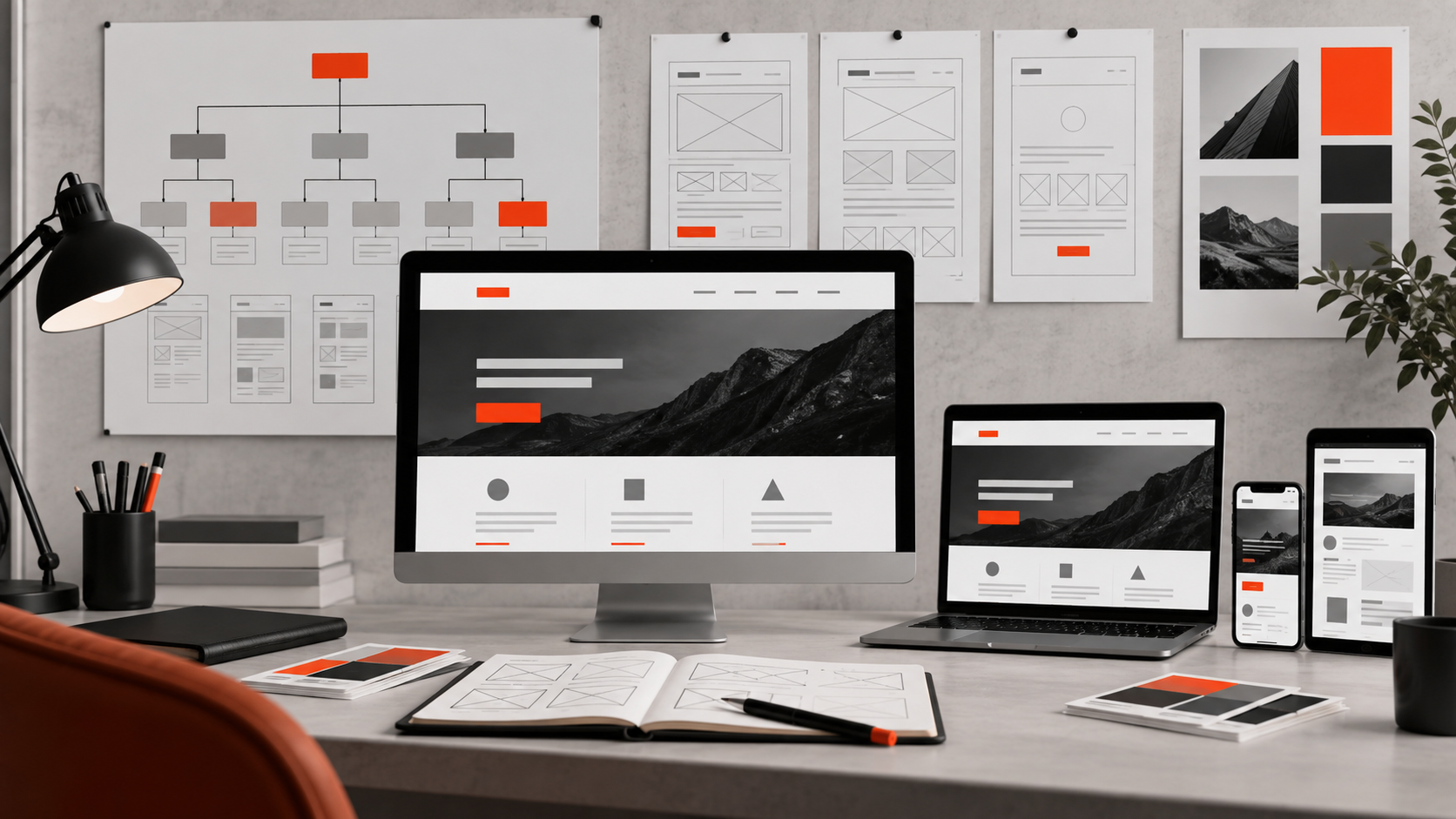
Development directions
Technology, architecture and scale are determined by the task. Below are the main types of projects our team works on.
01 · E-commerce
Online stores, catalogues, D2C platforms and growth of existing commerce systems.
02 · B2B and marketplaces
Partner portals, wholesale platforms, order systems and multi-sided commerce models.
03 · Websites acquisition
Corporate and service websites that work together with SEO, advertising, analytics and content.
04 · Digital products
Web services, personal portals, internal systems and products with complex business logic.
05 · Mobile
Mobile products as part of the client experience or the company’s operating system.
06 · development platforms
Redesign, migration, new features, optimisation, integrations and scaling existing solutions.
Not confident, which format needed? This is defined in the first meeting – to estimate and offer.
Discuss challengeArchitecture decisions
The solution does not end on launch day. Its foundation must support new features, channels, markets, roles and operational scope without constant rebuilding.
01
Product logic reflects the company’s processes, roles and operating model.
02
Structure, page templates, speed and indexing are accounted for before development.
03
Events and key actions can be measured from the first day of work.
04
CRM, ERP, payments, delivery, inventory and external services are part of the architecture.
05
New categories, features, markets and roles do not require rebuilding the entire system.
06
The client gets the code, access, documentation and control over their product.
Responsiveness, speed, accessibility, security and cross-browser support are part of standard implementation.
Working principles
This saves your time and budget: you know in advance where we will say “no” and why.
We do not start with design if the task is not clear.
First we determine what the project must change for the business and the user.
We do not promise a result we cannot control.
We are responsible for strategy, architecture, implementation quality and measurability. Sales also depend on the product, prices, team and market.
We do not create dependence on a contractor.
The client gets access, code, documentation and control over their product.
We do not publish customers’ internal information.
Cases, figures and cooperation details appear publicly only with the company’s permission.
EST. 2010We work by these principles from the first project.
Public work
We can show created websites, products and company logos when we have permission to do so. We do not publish budgets, sales metrics, internal problems, process architecture or details that could help competitors.
“We do not want internal information about our business published without permission.” Therefore, we treat customer information the same way.».
During the project discussion we will show relevant experience within the permitted scope and explain how we approach your challenges.
Dealer portal: online orders, real-time stock, personalised prices and ERP synchronisation.
View case →New website with an appointment system, service structure and content platform for doctors.
View case →The team understood our business model more deeply than some internal colleagues. We received not just a website but a working sales tool.
Olena K. · CEO, NOVA Market
The most valuable thing is one team responsible for everything from structure to advertising. No “that’s not our area of responsibility” over two years of work.
Andrii S. · Commercial Director, Steelex
We started with an audit, not a redesign, and it saved us months. Every stage had a clear goal and measurable result.
Mariia D. · Founder, Aurora Clinic
Business, users, channels and success criteria.
Structure, SEO, integrations and risk assessment.
Verification of journeys and logic before design.
Interface, development, technical SEO and analytics.
Handover, team training and growth plan.
The client sees progress throughout the project rather than the result for the first time on launch day. Timing is defined after diagnosis and depends on the scale of the solution.
Budget
Therefore, the budget is determined not by the number of pages but by the complexity of the systems, integrations, business logic and future growth. Below are guidelines for an initial understanding of scale; the final assessment is prepared after discussing the challenge.
Website for acquisition customers
from $6 000
Structure, prototype, design, development, basic analytics and a technical SEO foundation.
Discuss a projectE-commerce platform
from $12 000
Catalogue, purchase journeys, integrations, analytics, SEO architecture and preparation for growth.
Discuss a projectComplex digital product
Custom assessment
B2B systems, marketplaces, personal portals, mobile products and solutions with complex business logic.
Discuss a projectstrategic stage / discovery – from $2 500
For complex projects, we first define the architecture, integrations, risks, scope and implementation plan. If we continue development together, its cost may be credited towards the project budget.
The final cost and scope are fixed before the relevant stage begins.
Enquiry
In the first meeting we will define the context, constraints and possible work format. If we are not the right fit for your challenge, we will say so directly.
INFO@SHEKER.AGENCY+38 097 789 84 09
+38 098 698 94 77
Viber · Telegram · WhatsApp
Frequently asked questions
Cost depends on business logic, user roles, integrations, content, SEO risks, load and growth requirements. After the first meeting we determine the solution class and whether separate discovery is needed.
First we define the challenge, users, processes and constraints. Only then do we choose the architecture, platform and technology stack.
Yes. First we study the architecture, code, analytics, SEO and constraints of the existing solution. Then we recommend growth, partial rework or migration.
Structure, indexability, page templates, speed, events and key actions are designed into development rather than added after launch.
The client gets access, code, documentation, configured analytics and control over their product. The handover scope is fixed in the contract.
We publish logos, work, reviews and information about our involvement in projects only with the client’s permission. We do not disclose budgets, internal problems, commercial metrics, process architecture or other confidential details.
SEO
Website development, e-commerce platforms and digital products for business challenges: architecture, speed, analytics and technical SEO before development and not after launch.
A website without a designed architecture and analytics becomes an expense rather than an asset. We start with business challenges and future growth, then move to design. If you need a solution that can withstand growth, let’s begin with diagnosis.
Frequently asked questions
It depends on the business model and sales cycle. Product sales call for an e-commerce platform; search and several directions call for a corporate website; dealers and wholesalers call for a portal with an account area.
From $6,000 for a website to a custom estimate for a complex digital product. The price depends on business logic, integrations and scope of work.
Yes, this is part of the architecture: new categories, features, markets and roles should not require rebuilding the entire system.
Development and growth
Discuss a project.
In the meeting we will define the context, constraints and possible work format.
Book a meeting