Store conversion shows how many visitors chose you.

We find why visitors cannot find a product, add it to the cart, complete checkout or return for another purchase — and turn behavioural data into e-commerce decisions.

Catalogue · Search · Product · Cart · Checkout · Repeat purchase

A change in perspective

The buyer does not “drop out of the funnel”. It finds the reason not to continue.

Every unfinished order reflects a conscious or automatic decision.

A buyer may:

  • not find the right product
  • not understand the difference between options
  • not be confident about size or specifications
  • not trust the store
  • not accept the price
  • see delivery terms too late
  • not find a convenient payment method
  • put the purchase off to compare
  • encounter a technical error
  • not see enough reasons to return

We do not study exit percentages alone. We study the decision behind it.

Not checkout — the entire journey

The problem may appear in checkout, which starts in advertising.

  1. 01

    Saw → Found

    “Is what I need here?”

  2. 02

    Found → Compared

    “How do I understand the difference between options?”

  3. 03

    Compared → Chose

    “Is this product right for me?”

  4. 04

    Chose → Added

    “Do I trust the price, store and terms?”

  5. 05

    Added → Checked out

    “Is this purchase worth the effort and final amount?”

  6. 06

    Checked out → Received

    “Will the store keep its promise?”

  7. 07

    Received → Returned

    “Do I want to buy here again?”

Checkout completes the decision. But most arguments for or against a purchase form earlier.

Segments

One conversion figure may hide dozens of different problems.

Overall conversion mixes buyers with different intentions, contexts and experiences. The metric changes depending on:

  • Categories
  • Product
  • Availability
  • Margin
  • Traffic source
  • Advertising promise
  • New or returning buyer
  • Mobile or desktop scenario
  • Region
  • Delivery method
  • Payment method
  • Promo code
  • First or repeat purchase

Average conversion describes a store that does not exist. Real decisions are made by specific segments in specific conditions.

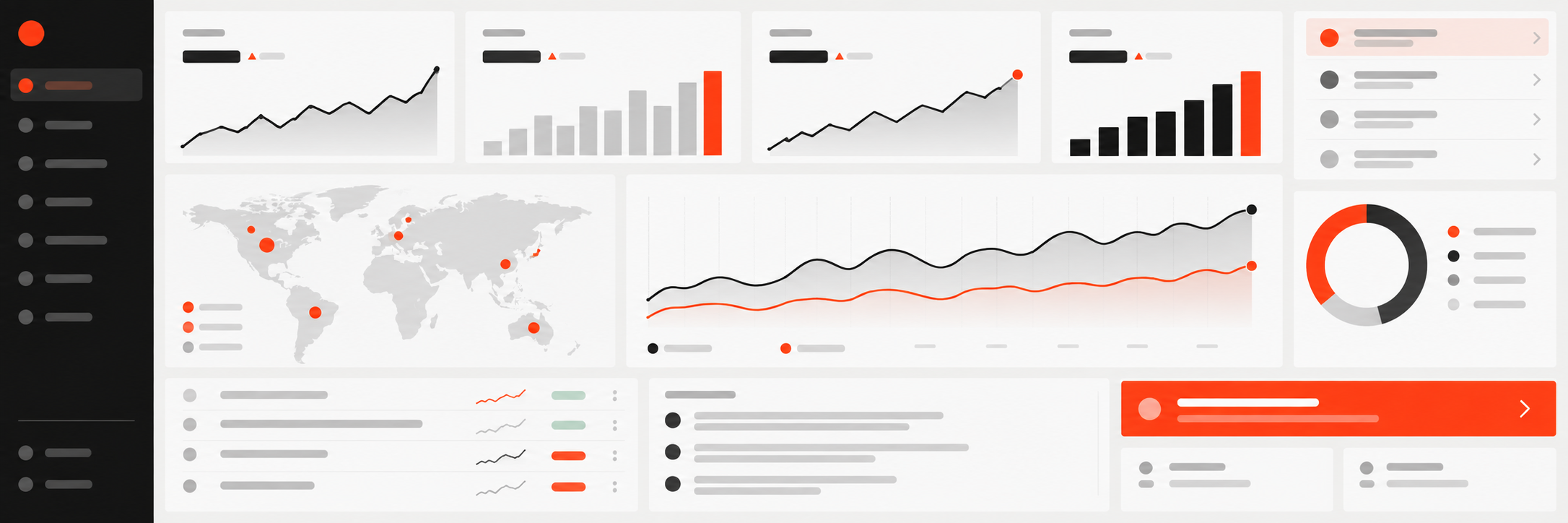
Illustrative measurement examples, not real customer metrics.

Illustration: conversion segments

Diagnostics

The problem is not always found on the page where the buyer left.

While others look for the problem in individual page metrics: we look at the buyer’s entire decision journey.

They view but do not add

The possible cause is not a weak button, but price, missing specifications, an unclear option, weak trust or unsuitable traffic.

They add but do not check out

The possible cause is using the cart as a wish list or comparison, unexpected delivery or a missing payment method.

They start checkout but do not finish

The cause may be the final amount, mandatory registration, a form error, delivery, payment or a change of intent.

They search but do not buy

The possible cause is a missing product, irrelevant results, wrong synonyms or inability to narrow the choice.

Mobile traffic does not buy

The possible cause is usage context, difficult comparison, slowness, keyboard, forms or an interrupted scenario.

They buy once and do not return

The possible cause is not the website, but the product, delivery, support, returns, communication or lack of reasons for a repeat purchase.

CRO starts by testing reasons, not redesigning pages with the worst metric.

Three sales models

One purchase. Three different decision models.

A B2C store, D2C brand B2B platform may end with the same action — an order. But buyers compare different things, trust different evidence and stop for different reasons. CRO therefore cannot be mechanically transferred from one model to another.

The same “Buy” button does not mean the same reason to purchase.

B2C retail

What to buy, in which store and on what terms?

Need → Search → Product comparison → Store comparison → Order → Delivery

The buyer is choosing at the same timeProduct, brand, seller, price, delivery, guarantee and payment method.

Competes withOther sellers, marketplaces, offline stores and the decision to postpone the purchase.

Typical losses

  • Cannot find the right product or compare options
  • Sees better terms from another seller
  • They learn about delivery too late
  • They see no reason to buy here

Core metrics

  • Search and category
  • Cart
  • Checkout
  • Average order value
  • Repeat purchase

CRO helps people find and compare products faster, reduce uncertainty and make the store’s terms a convincing part of the choice.

D2C

Why choose this brand trust its promise?

Problem → Brand introduction → Product understanding → Trust → First purchase → Experience → Repeat purchase

The buyer also choosesThe brand promise, positioning, problem-solving approach and value.

Competes withKnown alternatives, cheaper substitutes, retail and marketplaces, or distrust of a new brand.

Typical losses

  • The brand speaks beautifully but does not explain the product difference
  • The brand story replaces purchase arguments
  • The first purchase depends only on a discount
  • After purchase, the promise is not confirmed by the experience

Core metrics

  • First purchase
  • Purchases without discounts
  • Time to the second purchase
  • Retention
  • LTV

CRO turns a brand promise into a convincing first purchase and the experience into repeat demand.

B2B e-commerce

Can the company complete the purchase safely and profitably?

Need → Specification → Supplier search → Approval → Terms → Order → Supply → Repeat order

Who takes partThe user, initiator, approver, buyer, payer and recipient may be different people.

Competes withAnother supplier, a manager-led purchase, email and Excel, or an existing contract.

Typical losses

  • The user does not see their personal terms
  • The website does not support the roles in the purchasing process
  • Documents needed for approval are missing
  • Repeat orders are still placed manually

Core metrics

  • Approved cart
  • First order
  • Self-service share
  • Repeat order

CRO helps an order pass through roles, approvals and operational processes — from need to repeat purchase.

In B2C retail, the buyer chooses a product and seller. In D2C, they choose the product and the brand promise. In B2B, it is the supplier and purchasing process.

We do not optimise an abstract online store. We first define the sales model, choice logic, decision participants and repeat-purchase economics. Only then do we formulate CRO hypotheses.

Mobile commerce

Mobile conversion is lower not because the screen is smaller. The purchase context is different.

A mobile buyer may:

  • View a product in transit
  • Compare it with a physical store
  • Switch between apps
  • Look for a quick answer
  • Delay final payment
  • Use one hand
  • Interrupt the journey with a call or message
  • Return to the purchase from another device

We study the speed of the first useful interaction, search and filtering, product comparison, option selection, availability of important terms, keyboard and fields, checkout interruptions, cart saving, payment and switching between devices.

Mobile CRO is not a compressed desktop version. This preserves the buyer’s decision in a constantly interrupted context.

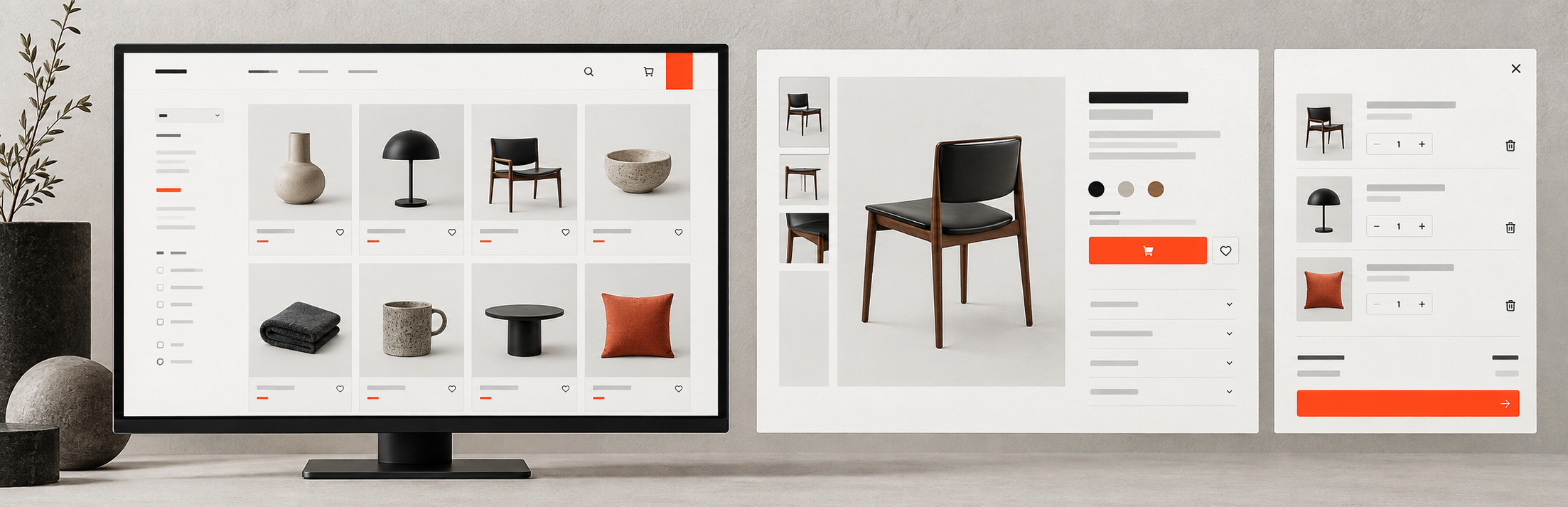
Illustration: mobile purchase

Not a single metric but the entire journey

While others look for a problem in isolated page metrics, we research the buyer’s entire decision journey.

01 · Where the cause really appears

A falling metric shows where the buyer stopped. But the cause may have appeared much earlier:

  • Advertising created the wrong expectation
  • The category did not narrow the choice
  • The product card did not resolve the key doubt
  • The price did not receive sufficient justification
  • Delivery terms appeared too late
  • The previous purchase experience destroyed trust
  • The store attracted an audience the offer does not fit

Therefore, we do not optimise pages in isolation. We restore the buyer’s sequence of decisions from first contact to receiving the order and making a repeat purchase.

02 · The buyer’s decision journey

Context → Expectations → Search → Comparison → Choice → Trust → Order → Experience → Repeat purchase

MetricIt records where the buyer stopped.

ResearchIt explains why they made that decision.

03 · Method testing

We do not play with A/B tests and do not spend time and money on guesses.

An A/B test may show which of two variants performed better. On its own, however, it does not explain which problem we are testing, why the buyer behaves this way, whether the change affects the real cause, whether one metric improves at the expense of margin, trust or repeat purchase, or whether the result transfers to other categories, segments or periods. Therefore, we do not start with a random list of changes.

  1. We define the decision the buyer must make.
  2. We find the stage where user behaviour changes.
  3. We collect quantitative and qualitative evidence.
  4. We establish a possible cause.
  5. We design a change that directly affects this cause.
  6. We choose the right testing method.

Not “we will change it and see”.
Data → Behaviour → Cause → Solution → Verification

We do not guess which interface variant will win. We study why the buyer makes the decision and verify changes that can directly affect this cause.

Not only the transaction

The first purchase proves that the customer agreed to try. Second, that the experience actually worked.

The first purchase is affected by

  • Advertising
  • Offer
  • Catalogue
  • Content
  • Price
  • Trust
  • Checkout

After purchase, the following affect decisions

  • Confirmation
  • Communication
  • Delivery speed and accuracy
  • Packaging
  • Product match
  • Returns
  • Support
  • Cause return

If CRO ends on a “Thank you for your order” page, it optimises a transaction, not the e-commerce business.

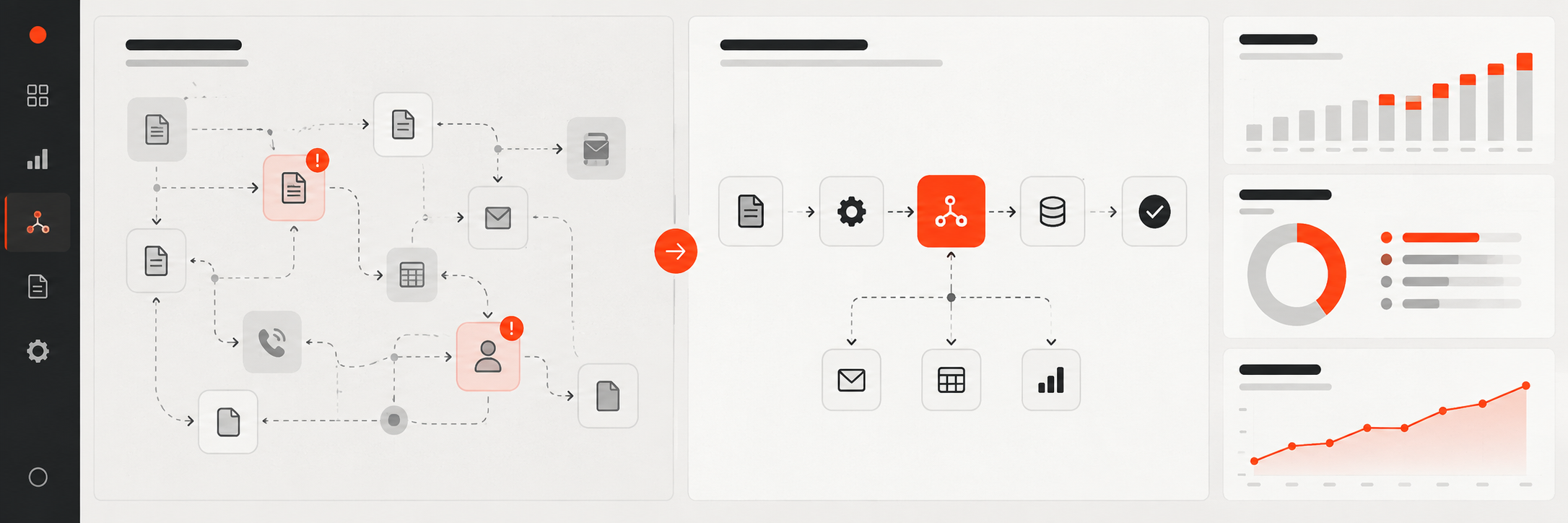
Illustration: CRO method

Method

We do not transfer “best practices” from someone else’s store. We look for reasons in your.

Evidence → Cause → Change → Verification

  1. 01

    Business-context

    we document business-model, margin, range, repeat purchase, channels and, operational constraints and priority segments.

  2. 02

    Map the buying journey

    We define states, transitions, micro-conversions and points where the buyer’s decision changes.

  3. 03

    Quantitative data

    We analyze categories, products, channels, devices, segments, funnels, search, cohorts, returns and repeat purchases.

  4. 04

    Qualitative data

    We study sessions, search queries, reviews, support requests, interviews, surveys and usability tests.

  5. 05

    Reasons and priorities

    We connect signals with possible causes and assess impact, evidence, complexity and risk.

  6. 06

    Solution

    We design changes to the offer, navigation, content, search, product pages, cart, checkout or post-purchase journey.

  7. 07

    Verification

    We choose the method: prototype, usability test, rollout, cohort analysis, A/B test or post-implementation analysis.

Start with evidence. Then find the reasons. Then change. Only after that do we test.

Research

Every CRO study starts not with a tool, but with questions.

  • 01

    Where does the decision change?

    Funnels, journeys, actions, categories, products and segments.

  • 02

    Who exactly does not buy?

    Source, device, intent, region, new or returning buyer.

  • 03

    What happens before checkout?

    Session recordings, errors, repeated actions, search, filtering and returns between pages.

  • 04

    What is missing for the buyer?

    Interviews, surveys, reviews, support, reasons for returns and usability tests.

  • 05

    Is the cause on the site?

    delivery, availability, price, product, support, operational processes and the post-order experience.

  • 06

    Which change may affect the decision?

    prototype, product changes, content, process, experiment or gradual implementation.

A tool collects a signal. Expertise establishes the connection between the signal, its cause and the economics.

Result

The result of CRO is not a list of tips. This system decisions for team.

Map conversion

Key states, transitions, conversions and points of loss.

Segmented analytics

Understanding the differences between categories, products, channels, devices and buyer types.

Evidence of causes

Quantitative and qualitative signals that explain behaviour.

Priorities

Problems and opportunities assessed by impact, evidence, complexity, risk and economics.

CRO-decisions

Changes to the offer, content, UX, catalogue, search, checkout, processes or repeat purchase.

Plan testing

Metrics, methods, success criteria and how to interpret the result.

The team gets not a hundred backlog ideas, but a reasoned sequence of decisions.

Confidentiality

Data about sales and buyer behaviour do not become our advertising content.

CRO can unlock conversion, revenue, margin, CAC, average order value, returns, weak categories, checkout problems, behavioural segments, advertising campaigns, operational constraints and experiment results. We do not publish this data, internal problems or results of changes without the client’s separate permission.

Resultand client belong to the client. Reasons for lost purchases — and more.

Public logos, work, reviews and descriptions of our involvement are used only within an agreed scope.

Formats work

CRO starts with questions, on which e-commerce business needed get answer.

CRO-Diagnosis store

from $1 500

For a business that sees losses but does not understand their causes: business context, a map of the buyer journey, analytics audit, segment analysis, loss causes, priorities and a testing plan.

Discuss conversion store

Ongoing CRO work

from $2 000

For an e-commerce team that needs a continuous cycle: data → research → decisions → implementation → testing → learning.

Discuss conversion store

The format is defined after the first conversation, an estimate of the data, traffic and store capabilities. The scope and cost are fixed before the relevant stage begins.

Enquiry

We find the reason why the buyer chooses not you.

In the first meeting we will define the key conversion, segments, available data, problem scale and the right research format. If CRO is not the right first step, we will say so directly.


    We will send confirmation and a meeting link. No presentations – straight to your numbers.

    Data about sales, buyers, advertising and internal processes will not be published or shared with third parties.

    INFO@SHEKER.AGENCY+38 097 789 84 09
    +38 098 698 94 77
    Viber · Telegram · WhatsApp

    Frequently asked questions

    Questions people ask before CRO research for a store.

    This is systematic research into why buyers do not move between key stages: search, product selection, cart, checkout, payment and repeat purchase. CRO combines data, research, changes and result verification.

    A UX audit mainly evaluates the interface and ease of use. CRO starts with business and behavioural metrics and may find causes in assortment, pricing, traffic, delivery, payment, processes or the post-purchase experience.

    No. Conversion is affected by demand, range, prices, availability, traffic, brand, delivery, payment, seasonality and processes. We are responsible for diagnostic quality, evidence for hypotheses, decision logic and correct testing.

    Depending on the challenge: web and product analytics, orders, products, categories, sources, devices, search, returns, support, session recordings and access to buyers. If analytics is incomplete, the first result may be a plan to fix it.

    No. The method depends on traffic, change risk and the questions. It may be a prototype, usability test, interview, rollout, pre- or post-change analysis, cohort comparison or A/B test.

    Yes. Sheker.Agency may design UX/UI, create prototypes, implement changes and integrations, and set up measurement. The exact scope is agreed separately.

    When a store has no stable traffic or orders, the problem may be a lack of demand, an uncompetitive offer or critical operational constraints. The right first step may then be strategy, analytics, marketing or platform restructuring.

    Yes. B2B CRO accounts for roles, approvals, individual terms, documents, repeat orders, managers’ work and integration with business processes.

    Yes, if the challenge concerns mobile commerce. The methodology accounts for usage context, interrupted journeys, state preservation, payment and repeat use.

    It depends on store size, data quality, number of segments, access to buyers and research depth. Timing and checkpoints are defined after the initial diagnosis.

    CRO for e-commerce accounts for range, categories, search, product data, price, margin, delivery, payment, returns, B2B terms and repeat purchase. General CRO focuses on registration, onboarding, activation, subscription and use of the digital product.

    Only with direct permission. We do not disclose conversion, sales, margin, advertising budgets, behavioural data, internal problems or experiment results without approval.

    SEO

    SEO information

    CRO for e-commerce: research into losses in the catalogue, product cards, cart, checkout, payment, delivery and repeat purchases. Data, hypotheses, experiments and CRO decisions.

    Online-store conversion optimisation starts not with other people’s “best practices”, but with diagnosis of the store’s own buying journey: segments, quantitative and qualitative data, reasons and priorities. Digital products and SaaS use a separate methodology — CRO for digital products.

    Frequently asked questions

    (01)

    How CRO for e-commerce differs from general CRO

    CRO for e-commerce accounts for range, categories, search, price, margin, delivery, payment and repeat purchase — unlike CRO for digital products and SaaS.

    (02)

    How much costs CRO-Diagnosis store?

    From $1,500. The exact cost depends on store size, data quality and research depth.

    (03)

    Do you work with B2B e-commerce?

    Yes. B2B CRO accounts for roles, approvals, individual terms and repeat orders.

    Discuss conversion.

    In the meeting, we will define the key conversion, segments and research format.

    Book a meeting