
First process logic, then automation.

We study how work actually happens, remove unnecessary actions and design the system around decisions, accountability and data.

Processes · Roles · Solutions · Data · Accountability · Automation

“We need a CRM / system for enquiries and approvals” What work should the business no longer perform manually after launch?

The problem is not the lack of a CRM

A new system will not fix a process nobody has reviewed. It will only make it digital.

A company can replace spreadsheets with a CRM, correspondence with statuses and manual approvals with automated routes. But if accountability is assigned incorrectly, data is duplicated and unnecessary stages remain, the business gets a new interface for old problems.

We therefore start not with fields, statuses and modules, but with the real work journey and decision points.

How this looks six months later

Employees continue bypassing the system, managers keep their own spreadsheets and leadership gets an incomplete picture.

Every customisation automates one more exception, and support cost grows faster than the benefit.

Automating the wrong process only lets people perform unnecessary work faster.

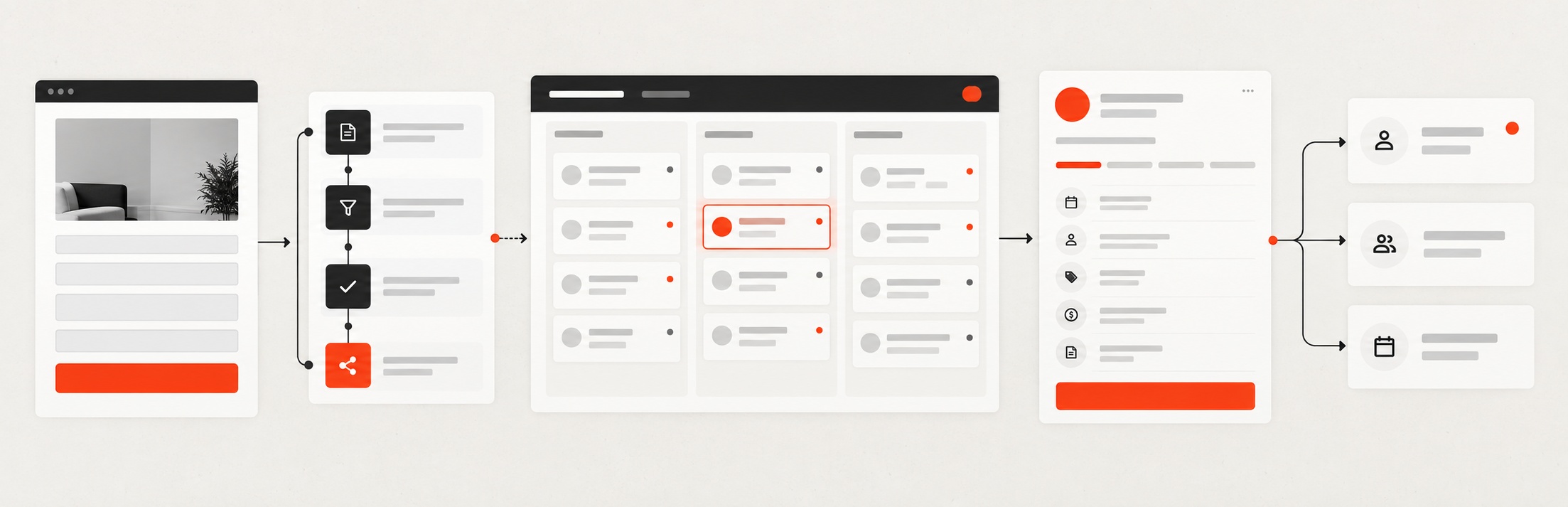
Work route through the company: event, data, decisions, ownership, action and result

Process · data · decisions · accountability · action · result

Architecture · process cost

cost internal systems determines not number features. and the amount of manual work the business will continue after launch.

A system may be technically complete but fail to reduce operating time, errors or decision time. In that case, the company pays for development while continuing to pay for the old way of working.

Money spent on the system

The process moved without change

  • migrated existing fields and statuses
  • recreated every historical stage
  • automated unnecessary approvals
  • left duplicated accountability
  • added yet another place to enter data
  • kept manual workarounds
  • implemented every exception as a separate feature

The company continues paying for manual work and additionally pays to support a system that did not remove it

Money invested in an operating model

The process changed for automation

  • defined the process outcome
  • removed actions that create no value
  • fixed accountability
  • defined single sources of truth
  • reduced the number of approvals
  • automated recurring decisions
  • left people only the actions that require their judgement

Every subsequent operation requires less time, manual action and context passing between people

The right system does not simply cost money. It changes the cost of every operation after launch.

When a ready-made CRM is not enough

A custom system is needed not because the business is unique, but when a standard tool makes a critical process more expensive or slower.

  1. 01

    The process is distributed across several tools

    Employees transfer data manually, while the company pays for repeating the same work.

  2. 02

    The solution depends on a specific person

    The process stops when an employee is absent or context is lost.

  3. 03

    The ready-made CRM does not support key rules

    The team creates spreadsheets, notes and workarounds alongside the system.

  4. 04

    The same data is entered several times

    The number of errors grows, and testing takes more time than the action itself.

  5. 05

    Every exception requires manual approval

    The cost of an operation grows with the number of customers and orders.

  6. 06

    Leadership cannot see the real state of the process

    Decisions are made on reports that arrive late or do not match.

Custom development is not needed if a standard CRM covers the key process without permanent workarounds and costly modifications.

We recommend a custom system only when its cost is justified by changing the business operating model.

Process → architecture

Strategy determines, which work needed change. Architecture how the system will make this change possible.

Every level has an operating cost: it determines how long an operation takes, how many people are involved and what the next change will cost.

  1. 01Business outcomeWhat should become faster, cheaper, more accurate or more transparent.
  2. 02Real processHow work really happens, including exceptions and workarounds.
  3. 03Decision points and rolesWhere a person chooses and approves, and who is responsible for the action, data and result.
  4. 04RulesWhat the system performs automatically and where the decision remains with a person.
  5. 05DataWhere information comes from, who changes it and where the single source of truth is.
  6. 06GrowthHow new processes and departments are added without rebuilding the foundation.

Every level has an operating cost

Operation timeNumber of manual actionsApproval volumeData duplicationDependence on peopleCost of the next change
Target operating model diagram: decisions, rules, data and ownership

Strategic-stage artefact · decisions · rules · data

Strategy determines which operation is worth changing. Architecture how much it will cost to operate and grow after launch.

Method

Before the first layout, we separate business rules from habits, that have accumulated over the years.

Nata Sheker personally participates in process research, operating-model decomposition, first-version boundaries and validation of key architectural decisions.

You work not with a manager who passes requests to the team, but with a person responsible for the link between the process, architecture and the cost of future changes.

  1. 01

    We restore the real picture

    We speak with process participants and verify how work actually happens. A company should not pay to automate a process that exists only in a policy.

  2. 02

    We find losses

    We record repeated actions, waiting, manual data transfers and unnecessary approvals. The first version does not contain features that support unnecessary work.

  3. 03

    We define decision points

    We separate automatic rules and actions that require human judgement. Automation reduces time without removing necessary control.

  4. 04

    We design the architecture

    We connect roles, scenarios, rules, data and integrations. Changing one rule does not require rebuilding several parts of the system.

  5. 05

    We shape the first version

    We choose one complete process with a measurable operational result. The business launches a smaller scope and verifies its effect before investing in the full system.

I – Process

Operating model

Which work the business stops doing and what changes in daily operations.

II – Boundaries

Boundaries first version

One complete process instead of trying to cover every department at once.

III — Consequences

Consequences of the decision

How today’s rule affects support cost and the speed of future changes.

The goal is not to automate more. It is to leave the business with less work to do at all.

Result stage

After stage strategy and architecture you know, which process change, that we automate and what is worth paying for in development.

  1. 01

    Model of the current process

    Participants, actions, decisions, data, delays and workarounds.

  2. 02

    Target operating model

    How the process should work after the change.

  3. 03

    Map of roles and responsibilities

    Who acts, makes decisions, controls and owns the result.

  4. 04

    Business rules model

    What is automated, where a person is needed and how exceptions are handled.

  5. 05

    Architecture data and integrations

    Information sources, dependencies and data accountability.

  6. 06

    Boundaries first version

    One complete process sufficient to test the operational result.

  7. 07

    Risk map

    Uncertainties that may affect timing and budget.

  8. 08

    basis for estimate development

    An agreed model instead of an approximate feature list.

Artefactand first stage: model process, map roles, boundaries first version

Materials that remain with the client after the first stage

The result has standalone value and does not oblige you to order further development from Sheker.Agency. You can continue working with us, hand the materials to your internal team or stop development if its cost is not justified by the result.

Enterprise-context

An internal system does not replace the company’s entire digital landscape. It must distribute responsibility between its parts correctly.

I

CRM and ERP

Which system is responsible for clients, orders, finance and operations?

II

Data

Where is the single source of truth, and who may change the information?

III

Integrations

Which actions require real-time exchange, and where periodic synchronisation is enough.

IV

Security and access

Who sees, changes, approves and deletes critical information.

V

Legacy and migration

What to preserve, integrate or gradually replace, which data has value and how to avoid stopping work.

VI

Internal team

How responsibility is distributed between Sheker.Agency, the client’s IT team and other contractors.

We account for more than the cost of a new system, the cost of implementing it in the company’s real work.

After launch

Launch shows not only whether the system works, but whether the way the business works has changed.

01

How many manual actions remain

02

Where employees work around the system

03

Which decisions still delay the process

04

Where data is entered repeatedly

05

Which rules create unnecessary exceptions

06

Which changes will deliver the greatest operational result

When needed, we work with the internal product or IT team and hand over the context of the decisions made.

The next budget goes not to new requests, but to changes whose necessity is confirmed by the system’s real work.

Typical situations

Three decisions that change operating cost.

We do not publish customers’ internal processes or metrics. We show the decision logic and operational consequence.

A process between several departments

Starting problem

An enquiry passes through several departments; each keeps its own records and manually passes data to the next.

Superficial decision

Create a shared system with fields for every department and a status for each stage.

Architecture question

Who is responsible for the result at each handoff, and which data is created only because the previous step is not trusted?

Solution

Define a single source of data, shorten handoffs and assign responsibility for the result, not the stage.

Operational consequence

Some handoffs disappear together with repeated data entry, and delays no longer depend on individual people’s workload.

System for approving non-standard conditions

Starting problem

Every non-standard condition is approved manually, and decisions depend on the manager’s availability.

Superficial decision

Automate the existing approval workflow in the form it has taken.

Architecture question

Which exceptions can be described by a rule, and which truly require a person’s decision?

Solution

Move the boundaries of acceptable conditions into rules, leave only exceptional cases to people, and record accountability for each exception.

Operational consequence

Most requests pass without waiting, and the manager makes decisions only where their assessment is truly needed.

An operating system for a service company

Starting problem

Planning, execution and closing work live in spreadsheets, messengers and coordinators’ memory.

Superficial decision

Move tables into the system without changing planning and work-closing logic.

Architecture question

Which work state is the source of truth, and when does it change?

Solution

Design the work-state model, transition rules and responsibility for approving them, and only then design the interface.

Operational consequence

Coordinators stop collecting statuses manually, and management sees the state of work without a separate reportg burden.

Format and cost

We assess not number screens, and complexity process and the scope of work the system must remove.

Strategy and architecture4–6 weeks

from $10 000

A redesigned process logic before development starts.

  • research process
  • Target operating model
  • roles and accountability
  • Rules and exceptions
  • Data and integrations
  • Boundaries first version and basis for estimate

stage has independent value and does not require ordering further development.

Send an enquiry

Development systemsfrom 12 weeks

Custom scope

Typical projects start at $50,000. The exact budget is determined after the strategy and architecture stage.

  • Number of processes and roles
  • Business rules
  • Data and integrations
  • Security
  • Migration
  • Uncertainty level

A system is not estimated by screen count.

Send an enquiry

{{prices require final approval from the Sheker.Agency owner before publication}}

Enquiry

Before estimating CRM development, understand which business work should no longer be done manually after it.

In the first conversation, we discuss the process, participants, decisions, data and systems the company already uses. We define where configuring an existing CRM is enough, where the process must be reconsidered and where custom development is justified.

If a standard solution addresses the challenge without costly workarounds, we will say so before the project starts.


    We will send confirmation and a meeting link. No presentations – straight to your numbers.

    The first conversation is about the cost and logic of your process, not about selling the largest possible development team. Internal processes, data and project materials will not be published or shared with third parties.

    INFO@SHEKER.AGENCY+38 097 789 84 09
    +38 098 698 94 77
    Viber · Telegram · WhatsApp