
Steelex – manufacturer dealer portal
Online orders for 300+ dealers: real-time stock, personalised prices and ERP synchronisation.
ResultOrder processg was reduced from 2 days to 3 hours.
View case →A system where your business customers work independently instead of writing to your managers. We design portals and operational systems around real roles, decisions and processes.
Dealer portals · Corporate customer portals · HR tech and services for companies · Procurement platforms · Partner networks · Service marketplaces
“We need a dealer portal / partner portal” Which decisions should participants make independently?
Complexity
Buyers, managers, partners, dealers, accountants, logistics staff and administrators may work in one system. Each has their own tasks, authority, constraints and context.
If you start with screens and a feature list, contradictions between these roles appear during development. We therefore design the interaction model first, and only then the interface.
Where the cost of a mistake appears
A single access decision changes the logic of orders, documents, approvals and reporting at once.
The more participants there are, the fewer decisions can be made locally: each one affects others.
An interface will not fix a process, that nobody has thought through.
If the product is bought by an end user, this is development digital products. If only your team uses the system, this is internal systems.
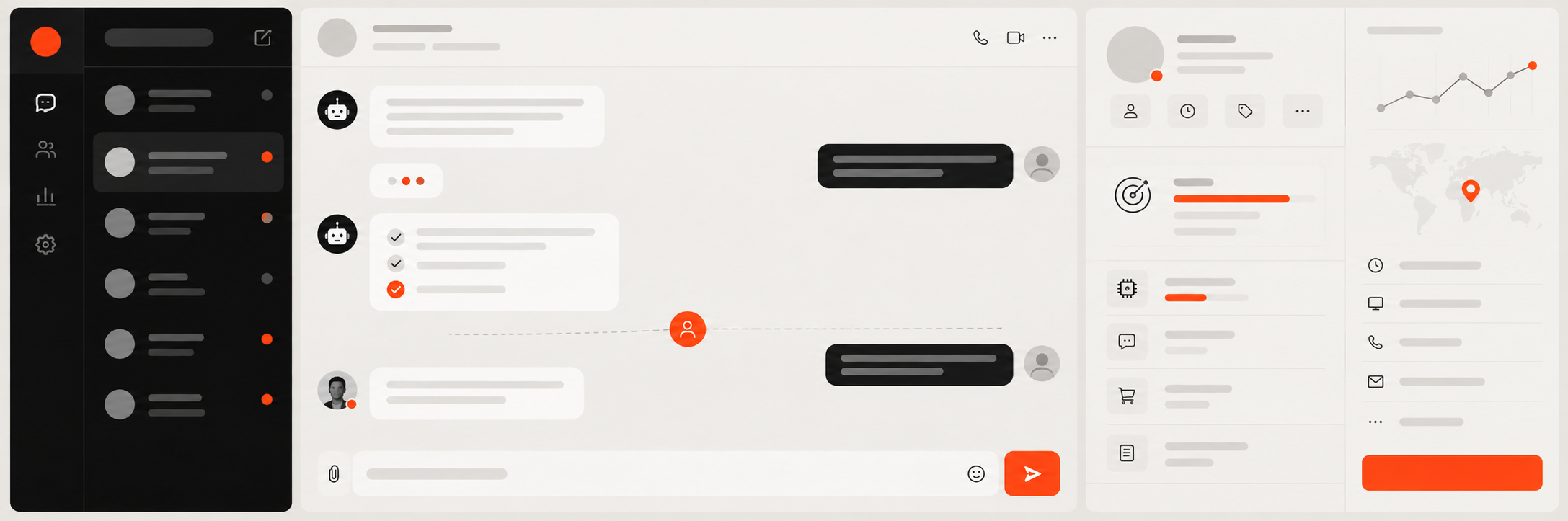
Strategic-stage artefact · participants · decisions · dependencies
Architecture · product economics
A company may spend a significant budget and get a working system without getting a product that supports the business.
Features may be implemented, interfaces designed and integrations connected. But if roles, data, rules and dependencies are designed incorrectly, every subsequent change becomes more expensive than the last.
Money spent
The product lives separately from the business
Money invested
The product increases value at every stage
cost architecture visible not in day launch. Its value is visible in the cost of every next decision.
We design it so money invested today remains part of the product tomorrow.
When needed architecture
Product strategy and architecture are needed when:
The more decisions depend on one another, the more expensive it is to start with a feature list.
Strategy and architecture
In B2B and enterprise projects, almost every department has its own view of the system. Sales want flexibility, finance wants control, operations want standardisation, leadership wants transparency and customers want autonomy. All these requirements may be justified while conflicting with one another.
Product architecture includes
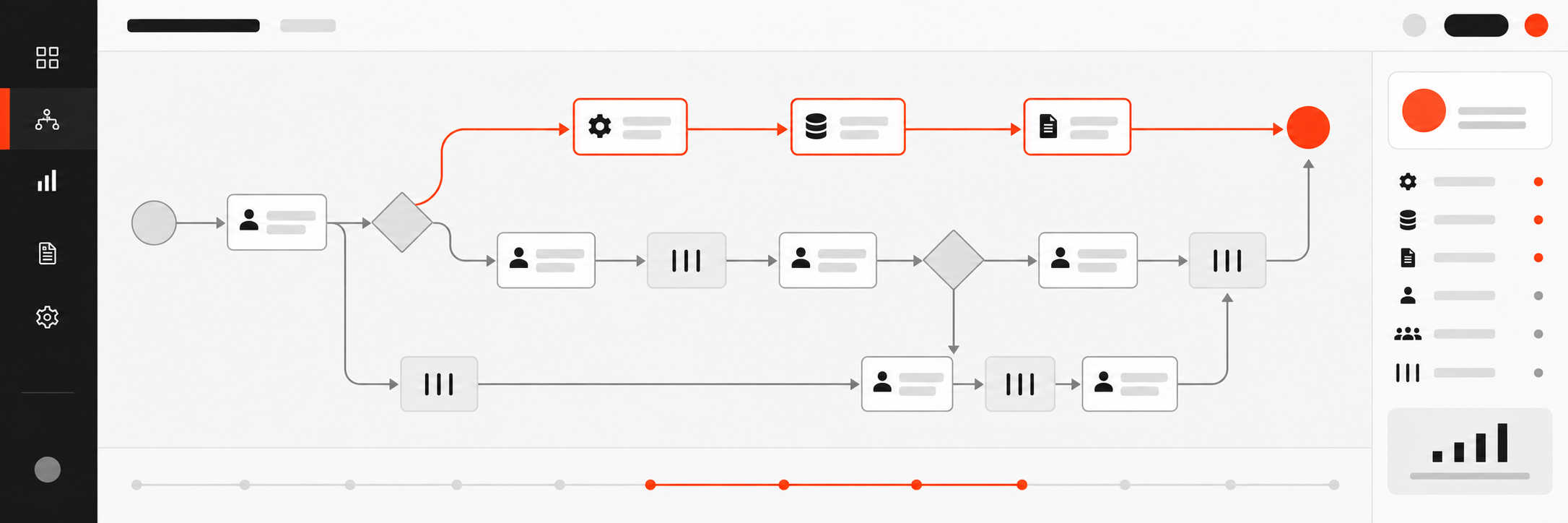
Strategic-stage artefact · scenarios · rules · data
Strategy is not a list of what we do. It is the boundary between what what creates value and what only spends the budget.
If there is no architecture between strategy and development, strategic decisions become wishes.
01
We speak with process participants and verify how work actually happens, not only how it is described in regulations.
02
We define where the user chooses, approves, checks, rejects or transfers accountability.
03
We record permissions, dependencies, exceptions and accountability boundaries.
04
We connect scenarios, data and business rules into one coherent system.
05
We model critical scenarios and find contradictions before they become expensive changes.
Define what change the product must create and what must be left out.
Verify that roles, rules, journeys and data do not contradict one another.
Understand how today’s decision will affect cost, speed and the product’s freedom to grow.
Our product is not the number of screens created. It is the quality of the decisions your system will rely on.
Result first stage
Who the system is for, what change it must enable and where its boundaries lie.
Who works with the system, which decisions they make and what they are responsible for.
How users move from need to result and where decision points arise.
Contracts, prices, limits, statuses, exceptions and approvals.
What information the system needs, where it comes from and who manages it.
What must be implemented first, what can wait and what should be dropped.
Which decisions must be tested before estimating full implementation.
The team estimates an agreed product model, not an abstract list of requests.
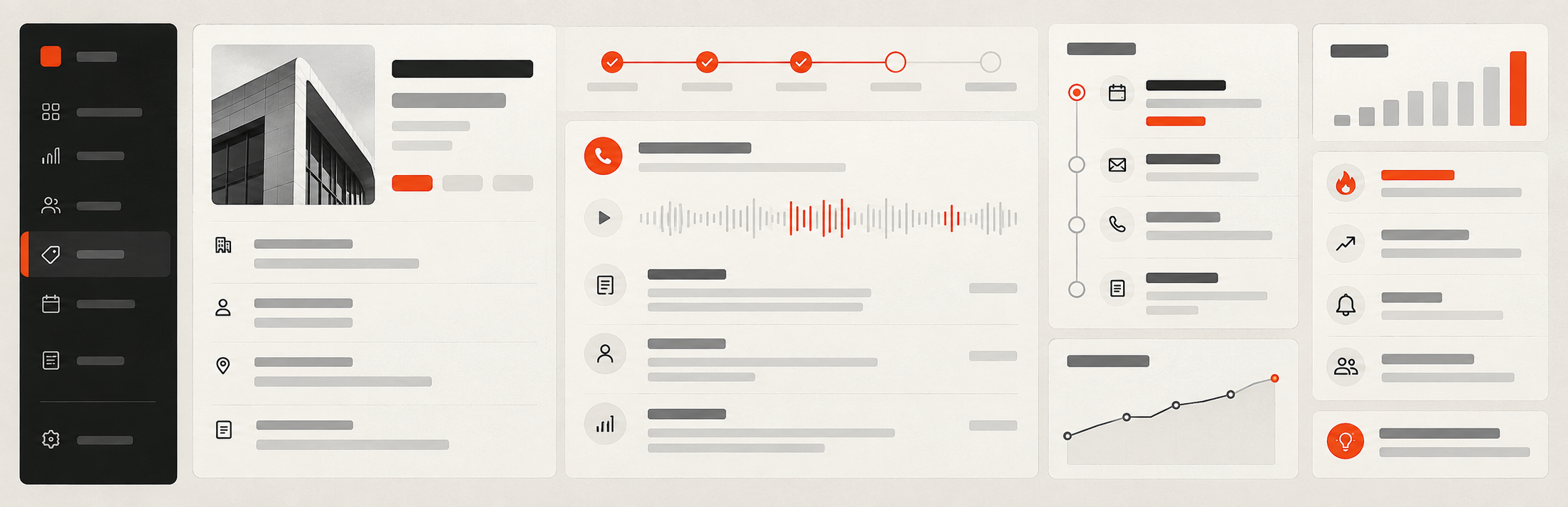
Materials that remain with the client after the first stage
The result has standalone value and does not oblige you to continue development with Sheker.Agency. You can use it to decide on implementation or hand the materials to your internal team.
Enterprise-context
B2B and enterprise platforms are almost never built from a blank sheet. They must work within the company’s existing operational and digital systems.
I
ERP, CRM, accounting, warehouse systems, analytics, document flow and internal services.
II
Sources, structure, accountability, quality, access and synchronisation rules.
III
Roles, access levels, critical actions, audit and accountability controls.
IV
Dependencies between systems, API constraints, exchange stability and behaviour when errors occur.
V
What is migrated, what is cleaned, what stays in the legacy system and how the transition happens.
VI
How accountability is shared between Sheker.Agency and the client IT team, and how the system accommodates new roles, processes and markets.
We do not design a new product in a vacuum. We define its place in the company operating model and digital landscape.
After launch
After launch, we verify how the system works in real processes, where users bypass the designed logic and which decisions need to be made next.
Analysis of real-world use
Verification of key scenarios
Prioritisation of next changes
Architectural control of growth
When needed, we work with the internal product or IT team and pass on the context behind the decisions.
The goal of support is not to create a constant stream of revisions, but to preserve product integrity as it grows.
Selected projects
We show the challenge, architectural decisions and changes in the operating model.
Online orders for 300+ dealers: real-time stock, personalised prices and ERP synchronisation.
ResultOrder processg was reduced from 2 days to 3 hours.
View case →Built from scratch: a catalogue of 40,000 products, seller accounts, CRM integration and delivery-service integrations.
Result+142{85c32a404beb3a17fad9859395e98171d5844d669a872c9f6728ab61e397d515} online sales in the first year after launch.
View case →Request approvals, documents and statuses in one account: separated role permissions, exception rules and synchronisation with the accounting system.
Result{{Reduction in manual processg by X{85c32a404beb3a17fad9859395e98171d5844d669a872c9f6728ab61e397d515} in N months}}
View case →Format and cost
We define the first stage and its budget after discussing the challenge. We estimate implementation on the basis of the agreed architecture.
Strategy and architecture4–6 weeks
from $10 000
An interaction model and product logic documented before development begins.
The stage has standalone value and does not oblige you to order further development.
Send an enquiryFirst version platformsfrom 8 weeks
from $25 000
One completed scenario with real roles, rules and data.
This is not a full enterprise platform, but a proven working scenario on which the rest is built.
Send an enquiryDevelopment platformsfrom 12 weeks
Tailored
Typical projects start at $50,000. The exact budget is determined after the strategy and architecture stage.
A platform is not evaluated by the number of screens.
Send an enquiryEnquiry
In the first conversation, we discuss the business model, participants, rules and decisions the system must support. We define where strategy and product architecture are needed, and where the challenge is ready for implementation.
If standard decisions are enough for the project, we will say so. If a flawed foundation could turn investment into cost, we will show this before development starts.
The first conversation is about your business and product, not about selling a development team. Internal processes, data and project materials will not be published or shared with third parties.
INFO@SHEKER.AGENCY+38 097 789 84 09
+38 098 698 94 77
Viber · Telegram · WhatsApp