
Steelex — manufacturer dealer portal
Online orders for 300+ dealers: real-time stock, personalised prices and ERP synchronisation.
ResultOrder processg was reduced from 2 days to 3 hours.
View case →We help determine which product the business actually needs, how it should work and what to launch first. From strategy and architecture to a working system.
B2B-platforms · Marketplaces · SaaS · Portals · Custom systems
«We need a portal / CRM / marketplace / platform» What behaviour, process or business result should the product change?
The cost of a decision
A client may arrive with a detailed technical brief, dozens of features and a finished vision of the system. But that still does not mean the right product has been defined.
Before implementation, answer
A technical brief may precisely describe what is not worth building at all. The answers to these questions produce strategy, not a technical brief.
Implementing a request
When starting with a list of features
Product decision
When starting with business changes
We connect to that, as the most expensive decisions become irreversible.
Strategic involvement
At the strategic stage, Nata Sheker, founder of Sheker.Agency, works personally with the client team.

Her role is not to approve a ready idea, but to test its foundation:
“My role is not to help you create more. It is to help you avoid creating what is unnecessary and missing what matters.”
You get more than a manager between the business and the team, You get a partner in making the most important product decisions.
01
02
03
04
05
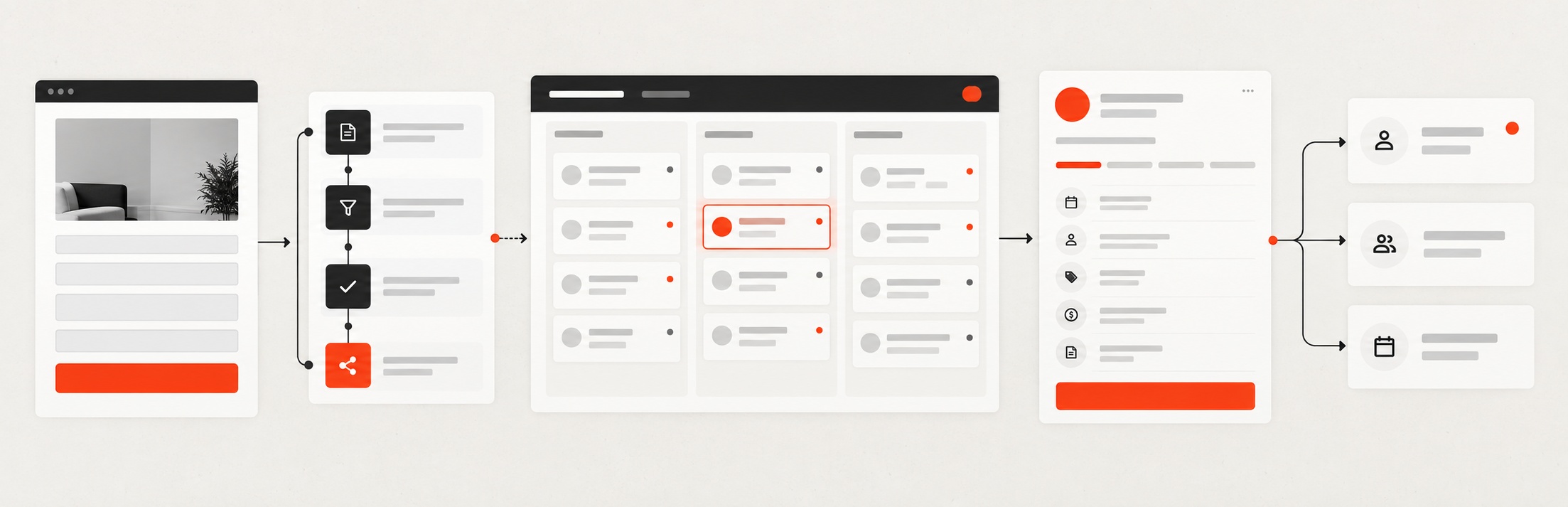
Strategic-stage artefact · roles · scenarios · rules
One screen can be drawn in a day. The rules that make it correct determine the future of the entire product.
The more roles, rules and exceptions there are, the more important architecture is before implementation.
First version
Questions budget
We do not start with features. We start with questions.
Questions first version
We start with different questions
MVP is not a shortened product. This is the shortest path to important answers.
If the first version cannot confirm or disprove a critical assumption, it only postpones uncertainty until after the budget has been spent.
Directions
When roles, individual terms, orders, documents and processes must be aligned.
When the product must create value for several parties and balance their interests.
When a digital product changes an internal process and must be adopted by the team.
When ready-made solutions do not fit the logic of sales, data or customer interaction.
When a product must create recurring value, retain users and support the business model.
The format name does not determine the decisions. The first priority is always the business change the product must create.
Result
A product concept connected to the business challenge and the user’s real need.
Defined roles, their interests, authority, conflicts and value criteria.
Key scenarios, rules, states and interaction logic.
The boundary of the first version and the assumptions it must test.
A clear product scope, priorities and the reasons for each key decision.
Defined signals, data and criteria on which growth will be based.
You get more than an estimate based on a feature list. You get a foundation for investing responsibly in the product.
Our work does not reduce the cost of code. It reduces the cost of wrong decisions.
Technology fit
We choose technology after defining roles, scenarios, rules and integrations. The solution must support not only the first version, but what follows.
Selection criteria
ALanguages
BFrontend
CBackend and data
DIntegrations
You get not the most complex technology, but most justified for your product challenge.
Selected projects
We show the challenge, decisions and verified result over a measurement period.
Online orders for 300+ dealers: real-time stock, personalised prices and ERP synchronisation.
ResultOrder processg was reduced from 2 days to 3 hours.
View case →Launch from scratch: a 40,000-item catalogue, seller portals, CRM and delivery-service integrations.
Result+142{85c32a404beb3a17fad9859395e98171d5844d669a872c9f6728ab61e397d515} online-sales for first year after launch.
View case →Enquiry approvals, documents and statuses in one portal: separated role permissions, exception rules and accounting-system synchronisation.
Result{{Reduction in manual processg by X{85c32a404beb3a17fad9859395e98171d5844d669a872c9f6728ab61e397d515} in N months}}
View case →Budget and format
We fix the first stage and its budget after discussing the challenge. We estimate implementation based on the agreed architecture.
Strategy and architecture4–6 weeks
from $10 000
First step. We define which product is needed and fix its logic before development.
It has standalone value: after the stage, you can decide whether to implement or change the product format.
Send an enquiryMVPfrom 8 weeks
from $25 000
One completed scenario that tests a critical assumption.
Productfrom 12 weeks
from $50 000
A full product with multiple roles, integrations and a growth plan.
What affects the price
The number of roles, scenarios, business rules, integrations, data and the level of uncertainty. That is why we start with strategy and architecture: a wrong decision is cheap at this stage and expensive after development. You pay for validated logic rather than rework.
Enquiry
In the first meeting with the founder of Sheker.Agency, we will define the change the product must create, where the main uncertainty lies and which first step will reduce it. If a digital product is not the right decision, we will say so before work begins.
Your idea, business model, internal processes and project materials will not be published or shared with third parties.
INFO@SHEKER.AGENCY+38 097 789 84 09
+38 098 698 94 77
Viber · Telegram · WhatsApp
Frequently asked questions
By defining the change the product must create for the user and business. Then we study roles, scenarios, rules, constraints and critical assumptions.
Yes. But before estimating implementation, we verify that it fits the product challenge, real processes and user needs.
An agreed product concept, role and scenario architecture, key rules, first-version boundaries, risks, success criteria and an implementation estimate. The exact scope is fixed before the stage begins.
No. The strategic stage has standalone value. Afterwards, the client can decide to implement, change the product format or avoid an unjustified investment.
Cost depends on the number of roles, scenarios, business rules, integrations, data and the level of uncertainty. The first stage and its budget are set after discussing the challenge.
The client receives agreed materials, documentation, access and control over the product. Handover terms are set in the contract.
SEO
Digital product development: product strategy and architecture for B2B platforms, marketplaces, SaaS, portals and custom business systems — from defining the product model to creating an MVP.
Every direction has its own business logic: roles, rules, data and integrations. We define the product model before implementation so the budget goes to decisions that create value.
Frequently asked questions
By defining the change the product must create for the user and business. Then we study roles, scenarios, rules, constraints and critical assumptions.
Yes. But before estimating implementation, we verify that it fits the product challenge, real processes and user needs.
No. The strategic stage has standalone value. Afterwards, the client can decide to implement, change the product format or avoid an unjustified investment.
Related services
Discuss product.
In a meeting, we will define the change, user role and first-stage format.
Book a meeting